
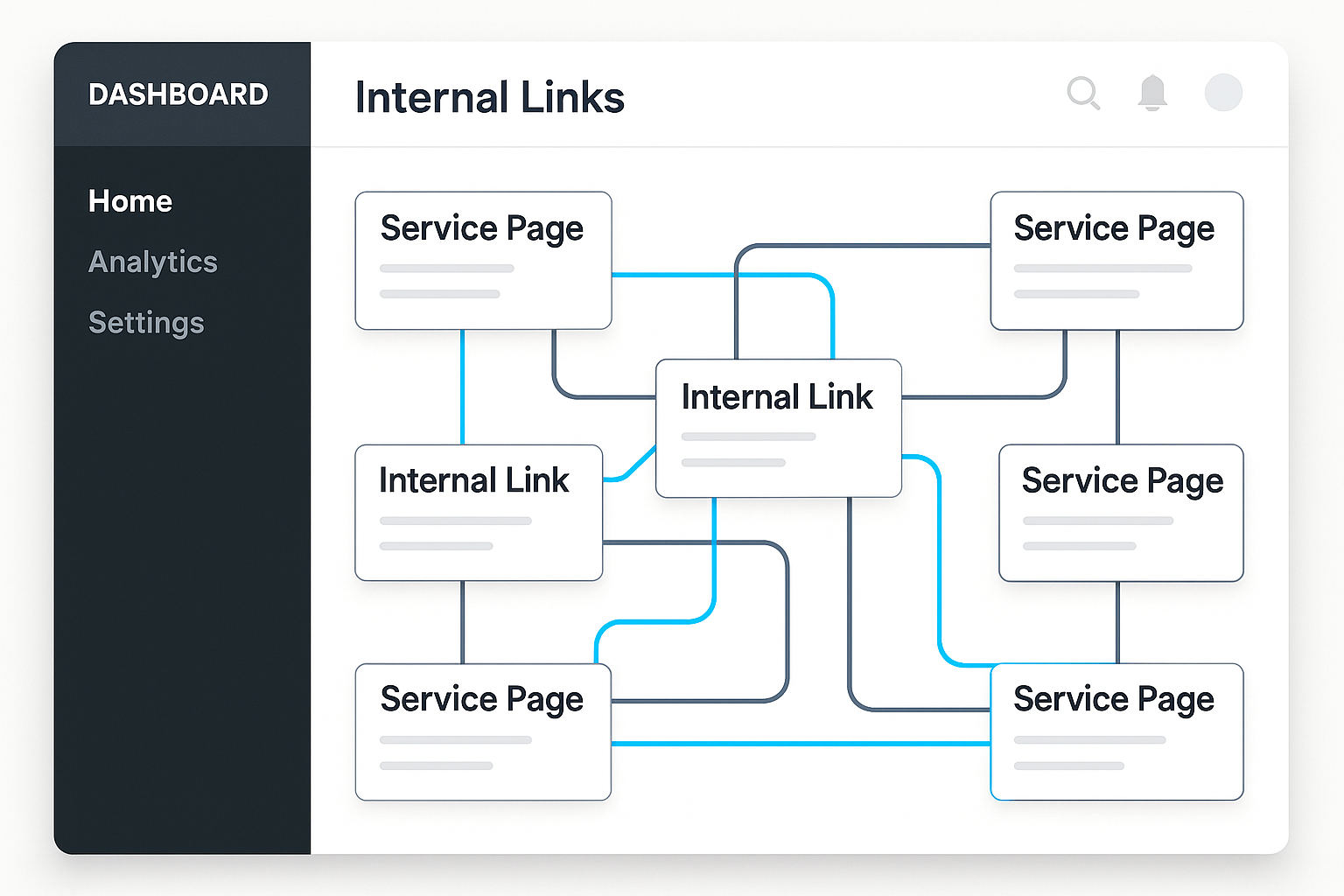
When building or optimizing a website, one of the most overlooked elements is the setup of internal links that point at real service pages.
These links are crucial for both your users and search engines, yet many businesses still link to generic or placeholder pages, missing out on real value.
If you want your website to perform, you need a system that ensures every internal link points at a real, actionable service page.
Internal links that point at real service pages do more than just connect your site—they shape the user journey and help search engines understand your site’s structure.
With the right approach, you can automate much of this process, reduce busywork, and keep your site’s navigation clean and purposeful.
Understanding the Importance of Internal Links to Real Service Pages
When users click through your website, they expect to find relevant, actionable content that addresses their needs. Internal links that point at real service pages do more than just connect your site—they guide visitors to the solutions they’re actually seeking.
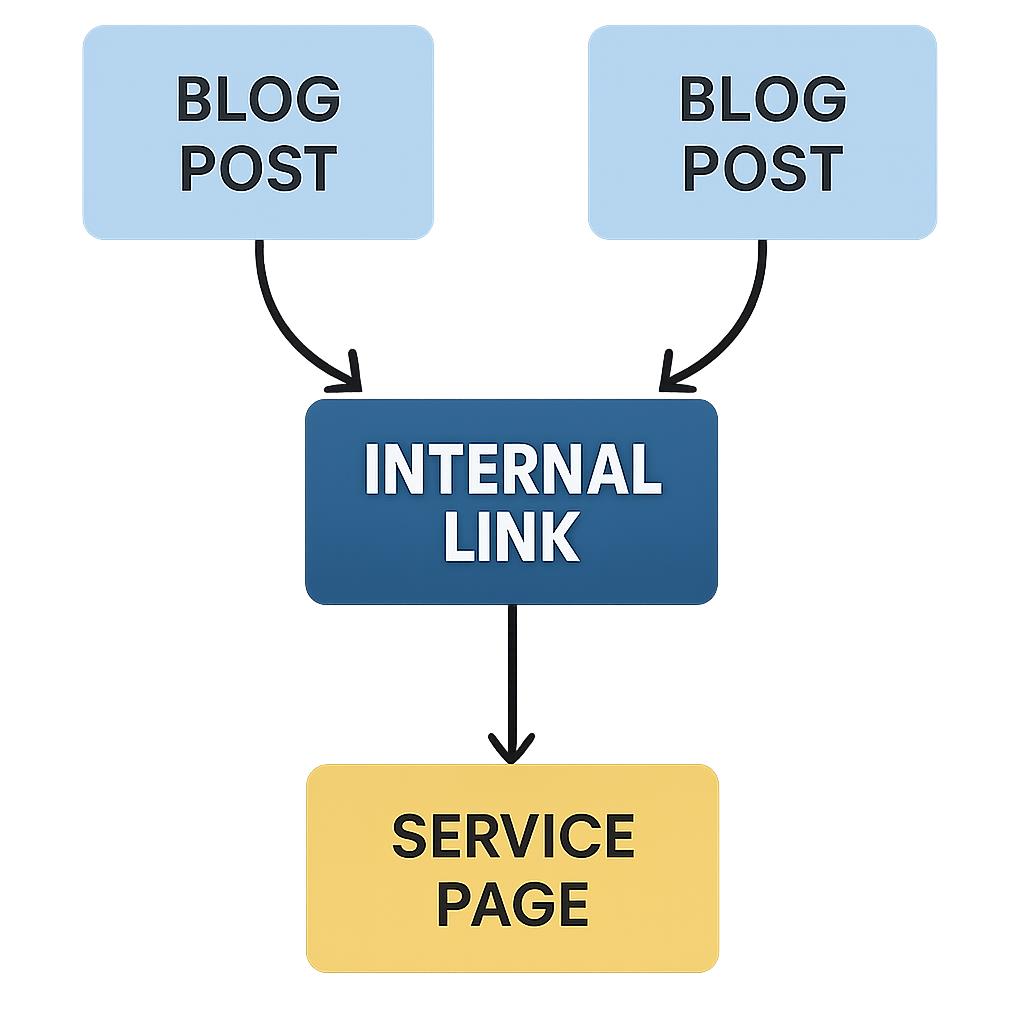
This targeted navigation not only boosts user satisfaction but also signals to search engines that your site is well-organized and authoritative [Moz].
Generic or placeholder pages, on the other hand, can frustrate users and dilute the value of your internal linking strategy.
If a visitor lands on a vague or unfinished page, trust and engagement often drop. Search engines may also devalue these links, reducing their impact on your overall SEO.
Why Real Service Pages Matter for SEO and User Trust
Search engines reward websites that use internal links that point at real service pages, as these demonstrate clear site structure and intent [Moz].
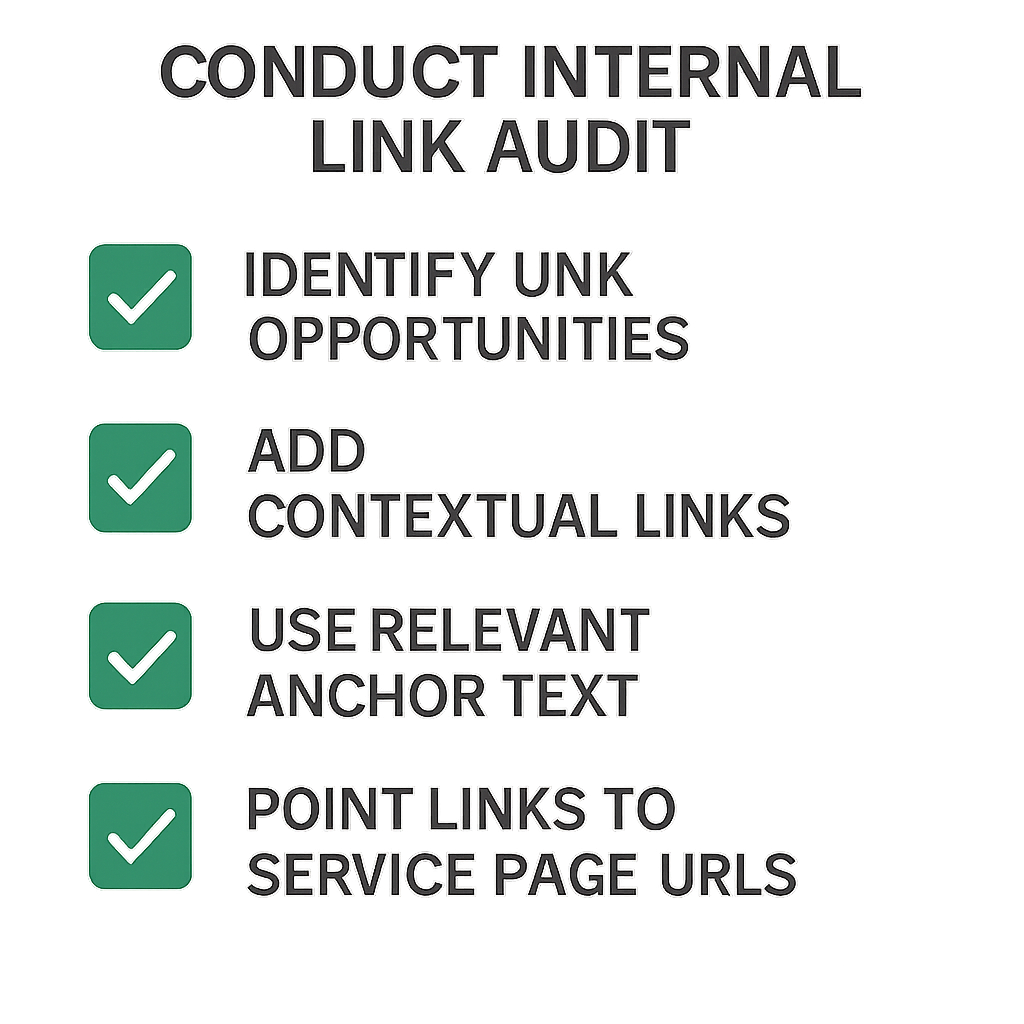
This approach helps distribute page authority more effectively, making it easier for important service offerings to rank higher. Users benefit, too, because they’re directed to pages that answer their questions or prompt them to take action.
To maximize the benefits of internal links that point at real service pages, avoid these common pitfalls:
- Linking to generic, placeholder, or "coming soon" pages
- Using vague anchor text that doesn’t describe the destination
- Overloading a single page with too many internal links
- Neglecting to update links after site changes
- Failing to run regular quality checks for broken links [developer.chrome.com]
Routine audits using automation tools can cut down the manual work involved in maintaining a healthy internal linking structure [wordpress.org].
These tools help ensure that every internal link points at real service pages, keeping both users and search engines happy. Regular quality checks also prevent broken links, which can negatively affect website performance and user trust [developer.chrome.com].
Practical Impacts of Strategic Internal Linking
When internal links are mapped directly to real service pages, users can more easily navigate to the solutions they need.

This not only enhances user satisfaction but also signals to search engines that your site structure is logical and user-focused. For example, linking from a blog post about "website speed" to your "Website Optimization Services" page can directly drive conversions.
- Avoid linking to generic pages that do not provide actionable next steps
- Use descriptive anchor text that matches the service offered
- Regularly audit links to ensure they remain relevant and functional
5 Steps to Set Up Internal Links That Point at Real Service Pages
Setting up internal links that point at real service pages can seem daunting, but with a systematic approach, you can streamline the process and avoid unnecessary manual work. Here’s a proven five-step workflow:
1. Inventory Your Real Service Pages
Start by listing all your actual service pages. Avoid including placeholders or "coming soon" pages. This ensures every internal link points at a real service page, not a generic or unfinished destination.
2. Map Out Key User Journeys
Think about how users navigate your site. Identify the main paths visitors take from blog posts, landing pages, or your homepage to your service offerings. This mapping helps you place internal links that point at real service pages where they’ll have the most impact.
3. Use Automation Tools for Consistency
Leverage automation plugins or scripts to insert internal links based on keywords or content types. Tools like those found in the WordPress SEO plugin directory can help ensure every internal link points at real service pages, reducing manual effort and errors.
4. Perform Quality Checks Before Publishing
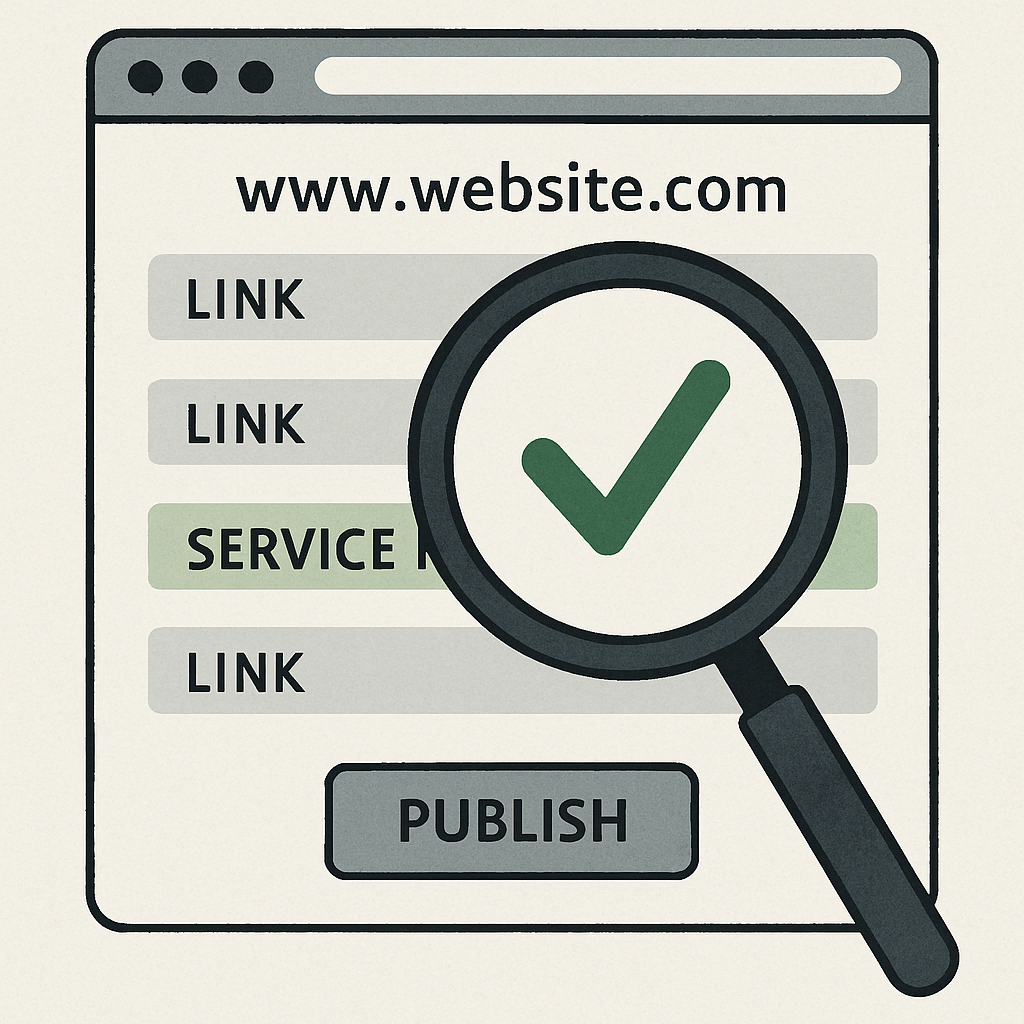
Before publishing any new content, run automated or manual checks to confirm that all internal links point at real service pages. Broken or misdirected links can harm both user experience and SEO. Use browser tools like Chrome DevTools for quick checks.
5. Schedule Regular Audits
Set up a recurring schedule—quarterly or biannually—to audit your internal links. Automation can flag outdated or broken links, ensuring your internal links that point at real service pages remain accurate as your site evolves.
Step-by-Step Operational Detail
Setting up effective internal links requires a structured approach. Begin by creating a comprehensive inventory of all your current service pages, noting their URLs and primary keywords. This inventory becomes the foundation for your linking strategy and helps prevent accidental omissions.
Example: Mapping Keywords to Service Pages
Suppose you offer both "SEO Consulting" and "Content Marketing" services. Assign primary and secondary keywords to each page, such as "SEO audit" for the former and "blog strategy" for the latter.
This mapping allows you to identify relevant anchor text opportunities in your existing and future content.
- List all service pages with their URLs and target keywords
- Map keywords to each service page for anchor text guidance
- Identify existing content that can naturally reference these services
- Set up automation tools to suggest or insert links based on keyword matches
- Schedule regular reviews to update mappings as services evolve
Trade-Offs in Link Placement
Deciding where to place internal links involves balancing SEO value with user experience. Placing links too early in a post may seem forced, while burying them at the end can reduce their impact.
Test different placements and monitor user engagement to find the optimal approach for your audience.
Pitfalls to Avoid
A common pitfall is using the same anchor text repeatedly, which can appear unnatural to both users and search engines. Vary your anchor text while keeping it relevant to the target service page.
Another issue is linking to service pages from irrelevant content, which can confuse readers and dilute the perceived value of your services.
Maintaining and Updating Your Internal Links
Internal linking is not a one-time task. As you add new service pages or update existing ones, revisit your internal linking strategy to ensure continued relevance. Use analytics to track which links are driving traffic and adjust your approach based on performance data.
Automation and Internal Links: Reducing Busywork
Automation is a game-changer for maintaining internal links that point at real service pages. By leveraging the right tools, you can drastically cut down on repetitive tasks and ensure consistency across your website.
How Automation Tools Help
- Automated Link Insertion: Tools can scan your content for relevant keywords and automatically insert internal links that point at real service pages. This ensures no opportunity is missed, even as you publish new content on a daily schedule.
- Bulk Editing: Update multiple links at once when service pages change, saving hours of manual work.
- Quality Assurance: Automated checks can flag broken or outdated links, so you can fix them before they impact user experience or SEO.
Integrating With Your Content Workflow
If you’re publishing a useful blog post on a daily schedule, automation ensures that each post includes internal links that point at real service pages.
This not only boosts SEO but also guides users toward your key offerings. For example, a post about lead generation can automatically link to your Lead generation automation service page.
Automation also supports turning one article into platform-specific social posts, each with links that drive traffic to real service pages. This multiplies the value of your content and keeps your audience engaged across platforms.
Streamlining Internal Link Management
Automation tools can handle repetitive internal linking tasks, freeing your team to focus on strategy and content quality. For example, plugins can automatically insert links to your most important service pages whenever relevant keywords appear in new posts. This ensures consistent coverage without manual intervention.
Example: Automated Linking in Action
Imagine you publish a new article about local SEO. An automation tool scans the content and inserts a link to your "Local SEO Services" page whenever the phrase appears.
This not only saves time but also guarantees that every mention is linked, improving both user navigation and SEO performance.
- Reduces manual effort for large websites
- Ensures consistency in linking practices
- Allows for rapid updates across multiple pages
- Minimizes the risk of human error
Trade-Offs and Limitations
However, automation is not without its drawbacks. Over-reliance can lead to irrelevant or excessive links, which may frustrate users and dilute SEO value. It’s important to set clear rules for when and where links should be inserted, and to periodically review automated outputs for quality.
Pitfalls to Watch For
One pitfall is failing to update your automation rules as your service offerings evolve. If you add or remove service pages, your automation setup must be updated accordingly. Otherwise, you risk linking to outdated or nonexistent pages, which can harm your site’s credibility.
Balancing Automation and Editorial Control
The best results come from combining automation with editorial oversight. Use automation for the initial pass, then have an editor review the links for context and relevance. This hybrid approach maximizes efficiency while maintaining high standards for user experience.
Balancing Automation and Editorial Oversight
While automation speeds up the linking process, it’s important to maintain editorial review to catch nuances that algorithms might miss.
For example, some service pages may be seasonal or temporarily unavailable, requiring manual adjustments. Establish a feedback loop between your automation tool and content team to address these edge cases.
- Schedule periodic reviews of automated link placements
- Train editors to spot and correct automation errors
- Keep a changelog for all automated linking updates
Quality Checks Before an Automated WordPress Publish
Quality checks are essential before you automate the publishing of any WordPress content. Even the best automation tools can’t guarantee perfection without oversight. Here’s how to ensure your internal links that point at real service pages are always accurate:
Pre-Publish Checklist
- Verify All Links: Double-check that every internal link points at a real service page, not a placeholder.
- Check Anchor Text: Make sure anchor text is descriptive and relevant, aligning with WCAG guidelines for accessibility.
- Test for Broken Links: Use browser tools or plugins to scan for broken links before publishing.
- Review for Overlinking: Avoid stuffing a single page with too many internal links that point at real service pages, which can confuse users and dilute SEO value.
Ongoing Monitoring
Set up automated alerts or periodic scans to catch issues as your site grows. This proactive approach keeps your internal links that point at real service pages healthy and effective, supporting both user experience and SEO.
The Importance of Pre-Publish Checks
Before hitting publish, it’s essential to ensure that every internal link points to a live, relevant service page.
Automated tools can help, but human oversight is crucial for catching subtle errors. For instance, a link might technically work but lead to a service page that’s outdated or off-topic.
Detailed Checklist for Quality Assurance
Develop a checklist that covers both technical and editorial aspects of internal linking. This should include verifying that anchor text is descriptive, links are not broken, and that each service page is linked from relevant content.
Automated link checkers can scan for broken URLs, but manual review is needed to assess link context.
- Confirm all links resolve to live service pages
- Ensure anchor text is natural and varied
- Check for over-linking to the same page within a single article
- Review for links to deprecated or redirected service pages
- Validate that links enhance user navigation, not just SEO
Worked Example: Spotting a Broken Link
Suppose you have a blog post about digital marketing and an internal link to your "PPC Management" service page. If the service URL changes, automated checks may flag the link as broken.
However, if the page is redirected, only a manual review will reveal whether the new destination is still relevant to the original context.
Trade-Offs in Automation
While automation speeds up publishing, it can introduce errors if not configured carefully. Relying solely on plugins may result in generic anchor text or links placed in awkward locations. Balancing automation with editorial oversight ensures that links are both functional and valuable to readers.
Pitfalls to Avoid
A common mistake is assuming that a successful automated check means all links are perfect. Automated tools may miss subtle issues like duplicate links or links that disrupt the reading flow. Schedule periodic manual audits to supplement your automated processes and maintain high quality standards.
Common Pitfalls in Automated Publishing
Automated workflows can sometimes introduce errors if not properly configured. For instance, template mismatches may cause links to point to outdated or irrelevant service pages. Always verify that dynamic content pulls the correct URLs and that anchor text remains contextually appropriate.
- Double-check for duplicate links within the same article
- Ensure that no broken or redirected URLs are present
- Review link placement for natural flow within the content
FAQ: Internal Links That Point at Real Service Pages
What are internal links that point at real service pages?
They are hyperlinks within your website that direct visitors to actual service pages rather than generic or placeholder pages, improving navigation and SEO.
How can automation help with setting up internal links?
Automation tools can automatically insert internal links based on keywords or rules, saving time and reducing manual work while ensuring consistency.
Why is it important to perform quality checks on internal links?
Quality checks prevent broken or incorrect links that can harm user experience and SEO rankings.
Can I repurpose one blog article into multiple social posts with internal links?
Yes, repurposing content into platform-specific posts with links to service pages helps drive targeted traffic and maximizes content value.
How often should I audit my internal links?
Regular audits, such as quarterly or biannually, help ensure all links remain accurate and functional as your website evolves.
Ready to Streamline Your Internal Linking?
If you want your internal links that point at real service pages to work harder for your business, schedule a call with AutomateSTL today.
Why Streamlining Matters for Growth
Streamlining your internal linking process is not just about saving time; it’s about consistency and scalability. As your website grows, manual linking becomes increasingly error-prone and difficult to manage.
By adopting a systematic approach, you ensure that every new service page receives the attention it deserves, and no opportunity is missed to guide users or search engines.
Getting Stakeholder Buy-In
One common challenge is getting buy-in from stakeholders who may not immediately see the value in internal linking. Demonstrate how improved internal linking can lead to measurable increases in organic traffic and conversions.
Show examples from analytics where users followed internal links to high-value service pages, highlighting the direct impact on business goals.
Integrating With Your Existing Workflow
Integrating internal linking automation with your existing content workflow requires careful planning. Map out your current publishing process and identify where internal links are typically added.
Consider using tools that integrate directly with your CMS, such as plugins or custom scripts, to automate link insertion without disrupting your editorial flow.
- Assess your current workflow for manual linking steps
- Identify automation tools compatible with your CMS
- Pilot the process on a small batch of pages before scaling
Common Pitfalls and How to Avoid Them
A frequent pitfall is over-automating, which can result in irrelevant or excessive links that harm user experience. Always review automated links for context and relevance.
Another issue is neglecting to update links when service pages are moved or renamed, leading to broken links and lost SEO value. Implement regular audits to catch and fix these issues promptly.
Measuring Success
Track key metrics such as click-through rates on internal links, bounce rates from service pages, and changes in organic rankings.
Use these insights to refine your linking strategy over time. If you notice certain service pages are not receiving enough internal links, adjust your automation rules to prioritize them.
For more on optimizing your internal linking structure, see our SEO Content Automation Service. If you’re ready to take the next step, explore our WordPress Automation Solutions for seamless integration.
Steps to Take Before Automating
Before implementing automation, ensure your service pages are clearly defined and up to date. Map out your website’s hierarchy so that automated tools can accurately assign links.
Consider running a small-scale test to observe how automated links behave in a live environment and adjust your settings accordingly.
- Document your primary and secondary service pages
- Set rules for which content types should include internal links
- Monitor user engagement metrics after automation launches